



Overview of the CNCAP Platform
Under the constraints of carbon neutrality targets, profound technological transformation will fundamentally reshape current socioeconomic and industrial structures. Human activities are expected to undergo major changes in the coming decades, leading to fundamental shifts in the quantities and structures of greenhouse gas and air pollutant emissions. Changes in energy systems, industrial layouts, and emissions will further exert significant impacts on the Earth’s environment. Therefore, there is an urgent need to develop a theoretical modeling framework that deeply couples human activities with natural systems, to build integrated assessment models of natural–social systems, to investigate changes in anthropogenic emissions and their climate, environmental, and resource effects under carbon neutrality pathways, and to explore synergistic solutions and policy pathways under multiple objectives.
To address this major scientific challenge, the research teams led by Academician Kebin He and Professor Qiang Zhang at Tsinghua University have developed natural–social coupled system modeling techniques based on independently developed tools and datasets, including the Multi-resolution Emission Inventory model, the Dynamic Projection model for Emissions, the CleanAir Model, the Dynamic Mitigation Cost model, and the near-real-time atmospheric composition tracking dataset. By coupling and integrating the integrated assessment model GCAM-China, the Community Earth System Model (CESM), atmospheric chemical transport models, and pollution exposure–response models, the teams have preliminarily established the Carbon Neutrality and Clean Air Synergetic Platform for Scientific Assessment and Decision Support (CNCAP).
Through dynamic simulations of socioeconomic and natural systems under future carbon neutrality and clean air pathways, CNCAP aims to address a series of key scientific questions related to the evolution and feedbacks between human activities and natural systems under China’s dual carbon goals, and to provide scientific and technological support for achieving sustainable development.
The CNCAP platform consists of three main modules: Emission Pathway Simulation, Pollution Exposure Simulation, and Cost–Benefit Assessment. These modules are jointly driven by socioeconomic pathways and multidimensional policy objectives. The Emission Pathway Simulation Module dynamically projects future energy and resource supply–demand patterns, as well as multi-media and multi-component emissions under different pathways. Based on future atmospheric species emissions provided by the Emission Pathway Simulation Module, the Pollution Exposure Simulation Module assesses the two-way feedbacks between meteorological variables and atmospheric composition under future climate change, and simulates changes in atmospheric pollutant concentrations and population exposure levels under different scenarios. The Cost–Benefit Assessment Module estimates emission reduction costs, climate effects, health effects, and resource effects under different emission pathways, and evaluates their overall costs and benefits.
In the future, we will continue to develop an integrated assessment modeling platform that deeply couples human activities with natural systems, providing open and user-friendly platform tools and data products for scientific research and management decision-making related to China’s dual carbon goals.
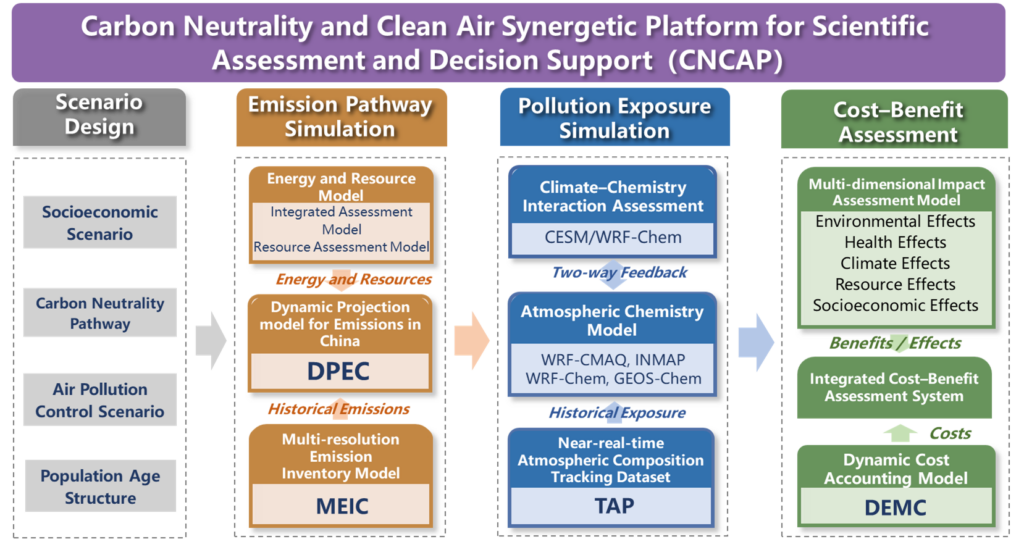
Figure 1. Technical framework of the CNCAP platform
Contact
For questions related to the development and use of the CNCAP platform, please contact:
cncap@tsinghua.edu.cn
Supporting Institutions
The development and maintenance of the CNCAP platform are supported by the following programs and institutions:
National Natural Science Foundation of China
National Key Research and Development Program of China
Institute for Carbon Neutrality, Tsinghua University
Energy Foundation China
Key Laboratory of Earth System Numerical Modeling, Ministry of Education