


The CleanAir Model
As air pollution control continues to advance, China’s air pollutant emission reduction efforts have entered a more challenging stage. There is an urgent need to develop precise and efficient pollution prevention and control strategies to support sustained improvements in air quality. Atmospheric chemical transport models are core tools for characterizing the physical transport and chemical evolution of pollutants in the atmosphere, and have been widely used in pollution source apportionment and emission reduction pathway simulation. However, these models need to resolve complex physical and chemical processes. They are computationally time-consuming and highly dependent on computing resources, making it difficult to meet the needs of multi-dimensional, multi-scenario, and large-scale emission reduction simulations.。
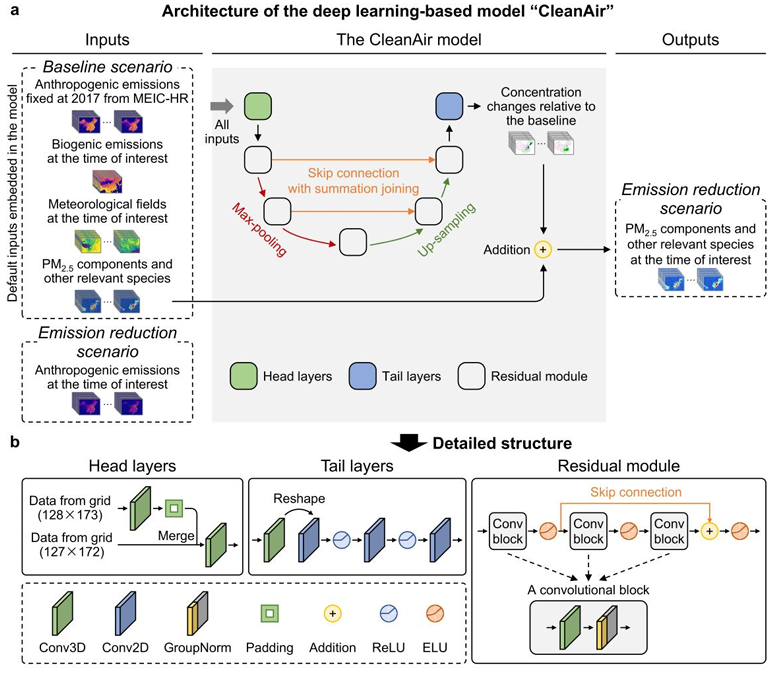
Figure1 Technical framework of the CleanAir Model
To address this challenge, the CNCAP team, with support from the National Natural Science Foundation of China and the National Key Research and Development Program of China, has developed an artificial intelligence-based atmospheric chemistry large model: the CleanAir Model. The CleanAir Large Model is designed for PM2.5 pollution reduction and control, enabling rapid simulation of PM2.5 concentration responses to changes in precursor emissions.
The model adopts a residual 3D U-Net deep neural network architecture, integrating residual connections and a symmetric encoder–decoder structure in three-dimensional space. It also constructs an adaptive weighted multi-task loss function for multiple chemical components, enabling efficient representation of the complex, high-dimensional, and nonlinear relationships among emissions, meteorology, and pollutant concentrations.
The model is trained using a daily emission-reduction scenario dataset generated by the WRF/CMAQ model. It covers the whole of China at a horizontal resolution of 36 km. The model supports independent regulation of emissions of primary particles, including PM2.5, PM10, BC, and OC, as well as SO2, NOx, NH3, and VOCs at both grid and sectoral scales. The model outputs daily gridded concentrations of PM2.5 and six chemical components: sulfate (SO₄²⁻), nitrate (NO₃⁻), ammonium (NH₄⁺), black carbon (BC), organic matter (OM), and other components.
The CleanAir Model requires only 9 seconds to simulate one full year of daily PM2.5 and chemical component concentrations. Its computational efficiency is five orders of magnitude higher than that of traditional models, while its simulation accuracy approaches that of the CMAQ model. By substantially reducing computational costs, the model enables large-scale and diverse emission reduction simulation tasks, overcoming the high-cost and low-efficiency limitations of physics-based models.
At present, Version 1 of the CleanAir Model has been launched on the CNCAP platform. Users can use the 2017–2025 MEIC emission inventories as the baseline, customize pollution control tasks based on meteorological fields from 2017 to 2025, and conduct online simulations. At the level of China’s 34 provincial-level administrative regions, users can set emission reduction ratios from 0% to 100% for primary particles, SO₂, NOx, NH₃, and VOCs across five sectors: power, industry, residential, transportation, and agriculture. The online simulation then generates daily PM2.5 and component concentration results for the full year.
The CNCAP platform provides convenient and user-friendly online data download and visualization services. Users can download simulated PM2.5 concentration data under different emission reduction tasks as needed and can also view and download time-series plots and spatial distribution maps of PM2.5 concentrations online.
In the future, the team will continue to upgrade the CleanAir Model in terms of model architecture, species coverage, spatial resolution, and control dimensions, further expanding its applicability in atmospheric chemistry, air pollution research, and management applications. Following the principle of openness and sharing, the platform will continue to promote the in-depth application of model tools, data products, and research outputs in both scientific research and environmental management.
Users are welcome to use the CleanAir Model and provide valuable feedback. For comments or suggestions, please contact the team at cncap@tsinghua.edu.cn.
Model Features >
- Using artificial intelligence to accelerate computation, the model achieves an efficiency improvement of more than 40,000 times compared with traditional atmospheric chemical transport models. It substantially reduces computing resource requirements and supports large-scale emission reduction simulation tasks.
- The model supports grid-specific emission reduction schemes across multiple sectors and multiple precursor species. It also supports meteorological fields from any available year, offering high flexibility and broad applicability.
- The model simulates daily gridded PM2.5 and component concentrations, supporting both short-term and medium- to long-term emission reduction simulations.。
Supporting Institutions >
The development and maintenance of the CleanAir Large Model are supported by the following programs and institutions:
- National Natural Science Foundation of China
- National Key Research and Development Program of China
- Key Laboratory of Earth System Numerical Modeling, Ministry of Education
- State Key Laboratory of Regional Environmental Security
Reference>
- Liu, S., Geng, G., Xiang, Y., Hu, H., Liu, X., Huang, X., & Zhang, Q. (2026). A deep learning model for predicting daily PM2.5 concentration in response to emission reduction. Science Advances. [Link]